
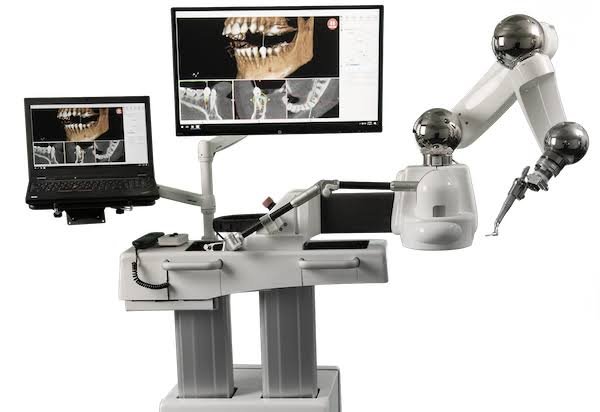

Foundation Healthcare Holdings has launched the Foundation Oral Maxillofacial Surgery Centre at Farrer Park Medical Centre, introducing Singapore’s first autonomous dental implant surgical robot to support advanced oral surgery procedures and improve precision in complex dental implant treatments.
Singapore’s private healthcare sector is advancing the adoption of robotic-assisted procedures with the launch of a new specialist centre focused on oral and maxillofacial surgery. Foundation Healthcare Holdings, one of Singapore’s largest private multi-specialty healthcare groups, has established the Foundation Oral Maxillofacial Surgery Centre to combine specialist surgical expertise, digital treatment planning, and robotic technology for next-generation dental care.
The newly launched centre brings together experienced oral and maxillofacial surgeons with advanced digital technologies designed to enhance accuracy, safety, and predictability in surgical procedures. A key highlight of the facility is the introduction of Singapore’s first autonomous dental implant surgical robot, marking an important development in the country’s adoption of robotics within dentistry and oral healthcare.
The growing use of robotic systems in dentistry reflects a wider transformation across healthcare, where advanced technologies are being integrated to support clinicians in performing complex procedures with improved precision. In particular, dental implant procedures often require detailed planning because factors such as bone structure, nerve positioning, and implant placement accuracy can significantly influence long-term outcomes.
The Foundation Oral Maxillofacial Surgery Centre aims to address these challenges by combining three-dimensional digital planning with robotic assistance. The centre will focus on providing advanced treatment options for patients requiring complex oral surgical interventions, including cases where conventional approaches may involve greater procedural difficulty.
Foundation Centre Brings Robotic Technology to Advanced Dental Implant Procedures
A major component of the centre’s offering is the use of an autonomous dental implant surgical robot developed by Beijing Yakebot Technology. The technology integrates digital treatment planning capabilities with robotic surgical execution while maintaining continuous supervision from qualified surgeons.
The introduction of this system represents a significant step in the development of dental implant procedures in Singapore. Dental implants require highly accurate positioning to achieve optimal functional and aesthetic outcomes, particularly for patients with complex anatomical conditions. Robotic-assisted systems can help surgeons execute pre-planned implant placements with greater consistency by using digitally mapped surgical pathways.
The robotic platform developed by Beijing Yakebot Technology has received European CE certification and approval through China’s National Medical Products Administration (NMPA) Innovative Medical Device pathway. These regulatory milestones demonstrate growing international recognition of robotic technologies designed for dental surgery applications.
Unlike traditional approaches where surgeons rely primarily on manual techniques and two-dimensional imaging, robotic-assisted implant surgery combines digital visualization, three-dimensional planning, and automated guidance. This allows clinicians to evaluate patient-specific anatomy before surgery and develop customized treatment strategies.
However, the technology is designed to support rather than replace specialist expertise. Surgeons remain responsible for clinical decision-making, patient evaluation, and procedural oversight throughout treatment. This approach aims to combine the advantages of robotics with the judgment and experience of trained oral and maxillofacial specialists.
Foundation Healthcare Holdings said the centre is particularly focused on improving outcomes for patients requiring complex procedures. By integrating specialist knowledge with advanced technology, the facility aims to create a more coordinated approach to oral surgical care.
The launch also reflects Singapore’s broader position as a regional healthcare innovation hub. Hospitals and medical institutions across the country have increasingly explored robotics, artificial intelligence, and digital health solutions to enhance treatment quality and improve patient experiences.
Foundation Healthcare and NUS Partner to Advance Robotic Surgery Research
Alongside the launch of the specialist centre, Foundation Healthcare Holdings has initiated a strategic collaboration with the National University of Singapore (NUS) Faculty of Dentistry to support research, education, and responsible implementation of robotic implant surgery.
The partnership is designed to create a framework for evaluating robotic technologies through clinical research and professional training. By involving academic experts, healthcare professionals, and technology developers, the collaboration aims to ensure that robotic applications are introduced based on evidence, clinical standards, and appropriate governance.
Education will be a key focus area of the partnership. Dental professionals and students will gain opportunities to understand emerging robotic technologies and their applications in oral and maxillofacial surgery. This will support the development of future healthcare professionals equipped to work with advanced surgical systems.
Research initiatives under the collaboration will examine the effectiveness, safety, and clinical applications of robotic implant surgery. As robotic technologies continue to evolve, healthcare organizations are increasingly emphasizing the importance of collecting real-world evidence before expanding adoption across different medical specialties.
The collaboration between Foundation Healthcare Holdings and NUS also highlights the growing relationship between healthcare providers, academic institutions, and technology companies in advancing medical innovation. Such partnerships allow new technologies to be evaluated within clinical environments while ensuring that patient safety remains central to adoption.
Industry analysts note that robotic surgery has already demonstrated significant impact in areas such as orthopedics, general surgery, and minimally invasive procedures. Dentistry and oral surgery are emerging as new areas where robotics may contribute to improved precision and workflow efficiency.
The launch of the Foundation Oral Maxillofacial Surgery Centre represents a strategic move toward integrating advanced technology into Singapore’s dental healthcare ecosystem. By combining specialist expertise, robotic assistance, digital planning, and academic collaboration, the centre aims to establish a new model for complex oral surgical care.
As demand for personalized and technology-enabled healthcare continues to increase, initiatives such as this could influence the future direction of dental surgery across Asia. The adoption of autonomous robotic systems, supported by clinical research and professional training, may help improve accessibility to advanced dental procedures while setting new benchmarks for precision and patient care.