
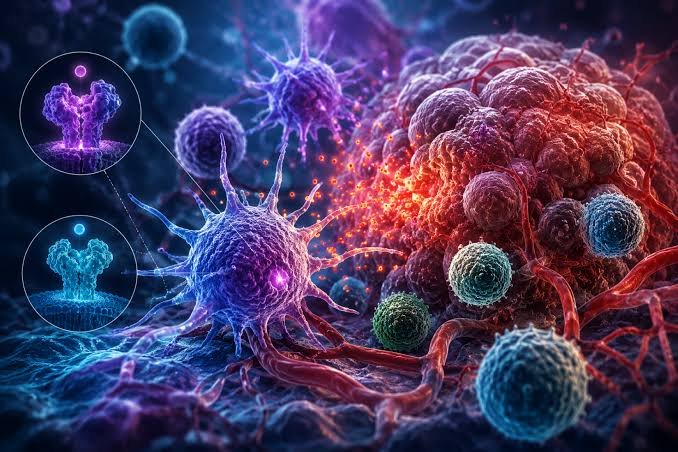

Kupando has entered a new stage of development after dosing the first patient in a Phase 1 clinical study of KUP101, its investigational treatment for advanced solid tumors. The milestone moves the Germany-based company from preclinical research into human testing and gives its lead program an opportunity to demonstrate whether its approach to activating the immune system can translate into clinical benefit.
The early-stage trial is initially evaluating KUP101 in patients with advanced skin tumors, with the broader study designed to assess the treatment in solid tumor cancers. The first patient dosing also represents an important development point for Kupando, which has been working to advance its research around innate immunity into a potential therapeutic platform.
The transition is significant for the emerging biopharmaceutical company because KUP101 is based on a mechanism that differs from many existing cancer treatments. Rather than being designed to target a particular tumor mutation, the candidate is intended to stimulate the body’s innate immune response and activate immune cells within the tumor environment.
KUP101 moves from laboratory research to human testing
KUP101 is described by Kupando as a first-in-class dual Toll-like receptor 4 and Toll-like receptor 7 agonist. These receptors are involved in the body’s early immune response, and the company is developing the candidate with the aim of stimulating immune activity around tumors.
The Phase 1 study will primarily examine safety and tolerability while researchers also assess how patients respond to treatment. Initial clinical development is taking place at oncology centers in Germany, providing the company with its first opportunity to evaluate KUP101 directly in patients.
Following administration to the first participant, a safety committee reviewed the initial dosing information and allowed enrollment to continue at activated clinical sites. That decision clears the way for Kupando to broaden patient recruitment as the study progresses.
For the company, the move into the clinic marks more than a development milestone. It provides an initial test of whether the biological activity observed during laboratory research can be reproduced in people with difficult-to-treat cancers.
Kupando founder and CEO Dr. Johanna Holldack described the first patient dosing as a major turning point for the company. She highlighted the potential of innate immune stimulation and trained immunity as an alternative way of approaching cancers that can be difficult to treat using existing approaches.
The concept of trained immunity is particularly relevant to Kupando’s strategy. Unlike adaptive immune responses that are highly specific to particular antigens, trained immunity involves changes that can leave innate immune cells better prepared to respond to subsequent challenges. The company is investigating whether this type of immune activation can contribute to a stronger and potentially longer-lasting response against tumors.
The approach could also give KUP101 relevance beyond a single cancer subtype. Because the candidate is not dependent on identifying a particular mutation, Kupando believes it could eventually have applications across multiple tumor types.
However, that broader potential remains to be demonstrated clinically. Phase 1 trials are primarily intended to establish whether a treatment can be administered safely and to determine appropriate dosing for subsequent studies. Evidence of meaningful antitumor activity will need to emerge through further development.
Combination potential could shape KUP101’s development path
Another area of interest for KUP101 is its potential use alongside existing immunotherapies. Kupando’s preclinical research has indicated additive and synergistic effects when the candidate is combined with immune checkpoint inhibitors.
Checkpoint inhibitors have become an important part of modern oncology, but a significant number of patients either fail to respond initially or eventually develop resistance. Stimulating innate immune activity could potentially provide another way to strengthen the immune response in these settings.
This combination strategy could become an important part of KUP101’s future clinical development if the Phase 1 study establishes a manageable safety profile and provides early evidence of activity. It may also allow Kupando to position the treatment alongside established therapies rather than attempting to replace them outright.
The commercial opportunity, however, will depend heavily on clinical differentiation. The oncology market already includes numerous immunotherapies, targeted treatments and combination regimens. A new immune-based therapy will need to demonstrate a meaningful advantage in efficacy, durability, safety or patient selection to establish a place in treatment.
Kupando is also pursuing research outside oncology. Its preclinical pipeline includes programs addressing infectious diseases and antimicrobial resistance. These efforts use what the company describes as pathogen-agnostic, host-directed approaches, meaning the focus is on supporting the body’s response rather than targeting individual pathogens directly.
For now, KUP101 remains the company’s most advanced program and the first to reach clinical testing. The Phase 1 trial should provide the next set of evidence needed to determine whether its immune activation strategy can move toward larger and more definitive studies.
The first patient dosing therefore places Kupando at an important juncture. The company has moved beyond laboratory validation and into a stage where safety, dosing and early clinical signals will determine the future of its lead asset. If those findings are supportive, KUP101 could advance into broader studies across solid tumors and potentially into combination trials with checkpoint inhibitors.
For the wider oncology sector, the program adds another example of drug developers exploring immune mechanisms beyond conventional mutation-targeted approaches. Whether that translates into a meaningful treatment option will ultimately depend on the clinical data generated in the months and years ahead.
Ref: https://pharmatimes.com/news/kupando-doses-first-patient-in-phase-1-trial/