
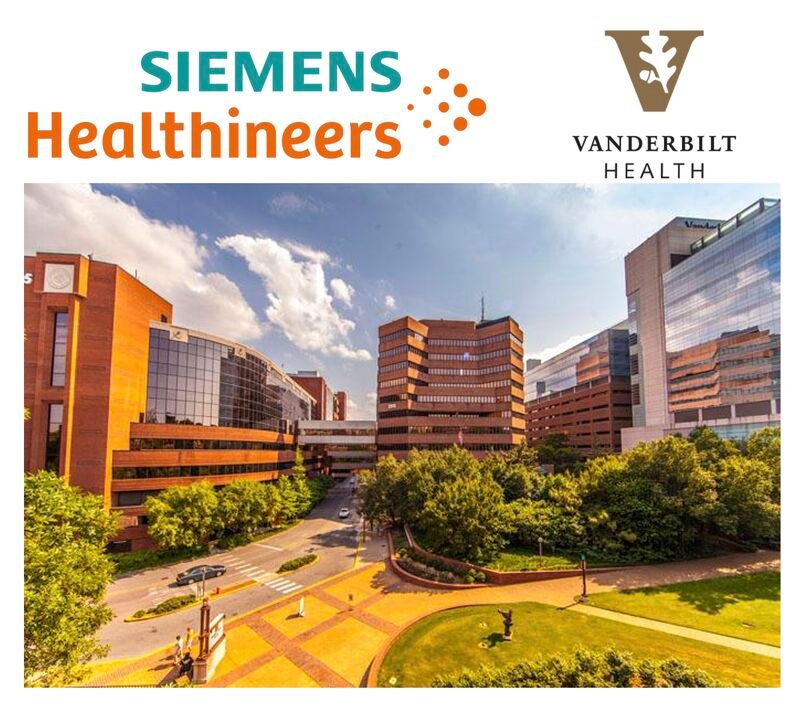

The Vanderbilt Health Siemens Healthineers Value Partnership will modernize diagnostic imaging and radiation oncology infrastructure while expanding collaboration in AI in oncology, precision medicine, and hospital workflow innovation.
The Vanderbilt Health Siemens Healthineers Value Partnership marks a significant investment in the future of advanced cancer care and diagnostic imaging, as the two organizations announced a multi-year agreement valued at $87 million. The collaboration is designed to modernize imaging infrastructure, strengthen radiation oncology capabilities, and create a long-term innovation framework that supports clinical excellence, operational efficiency, and the growing role of AI in oncology across healthcare systems.
Healthcare providers worldwide are increasingly investing in intelligent imaging technologies and digitally connected care environments as demand for earlier disease detection and personalized treatment continues to rise. Artificial intelligence has become an important component of this transformation, helping radiologists and oncologists interpret medical images more efficiently, prioritize critical findings, optimize clinical workflows, and support treatment planning. Against this backdrop, the Vanderbilt Health Siemens Healthineers Value Partnership reflects a broader industry movement toward combining advanced medical technologies with data-driven healthcare delivery.
The agreement extends beyond equipment procurement. Instead, it establishes a long-term strategic relationship focused on technology planning, implementation, lifecycle management, workforce development, and future innovation initiatives. Industry analysts view this type of partnership as increasingly common among leading academic health systems seeking to modernize infrastructure while creating scalable platforms for future clinical and operational advancements.
Vanderbilt Health, recognized for its research, education, and patient-centered care, will leverage Siemens Healthineers’ expertise in imaging technologies and healthcare innovation to strengthen services across its hospitals in the Nashville region. The collaboration also creates opportunities to evaluate emerging technologies that may influence future models of precision medicine, digital diagnostics, and oncology care.
The investment comes at a time when hospitals are balancing growing patient volumes with increasing expectations for faster diagnoses, more personalized treatment strategies, and improved operational efficiency. Strategic technology partnerships have therefore become an important mechanism for healthcare systems seeking sustainable modernization while maintaining high standards of clinical care.
Vanderbilt Health Siemens Healthineers Value Partnership Expands Imaging and Cancer Care Capabilities
Under the Vanderbilt Health Siemens Healthineers Value Partnership, multiple clinical departments will receive access to advanced diagnostic imaging and radiation oncology technologies over the coming years. The agreement covers magnetic resonance imaging, computed tomography, molecular imaging, interventional radiology, and radiation oncology systems that will support patient care across Vanderbilt Health facilities, including University Hospital and Monroe Carell Jr. Children’s Hospital.
Rather than implementing isolated technology upgrades, the partnership is structured around standardizing imaging infrastructure throughout the health system. Standardization allows hospitals to improve consistency in clinical operations, simplify equipment management, strengthen staff training, and enhance service reliability across multiple locations.
Radiation oncology represents one of the most significant focus areas within the agreement. As cancer incidence continues to increase globally, healthcare providers are investing heavily in technologies that improve treatment precision while minimizing exposure to surrounding healthy tissues. Advanced imaging systems play a central role throughout the oncology care pathway by supporting diagnosis, treatment planning, therapy guidance, and long-term patient monitoring.
The collaboration also includes workforce development initiatives designed to help clinical teams maximize the benefits of new technologies. As medical imaging systems become increasingly sophisticated, ongoing education and specialized technical support have become essential components of successful technology adoption.
Jane Freedman, MD, Deputy Chief Executive Officer and Chief Health System Officer for Vanderbilt Health, stated that providing patients with early access to the latest medical innovations remains central to the organization’s mission. She noted that partnering with Siemens Healthineers will help Vanderbilt Health remain at the forefront of imaging technology while expanding access to future healthcare innovations.
Beyond hardware deployment, Siemens Healthineers will provide implementation expertise, operational support, and strategic planning throughout the lifecycle of the partnership. This integrated approach reflects the healthcare industry’s growing preference for long-term collaborative relationships over traditional equipment purchasing models.
Partnership Strengthens Precision Medicine and Digital Healthcare Innovation
One of the most forward-looking aspects of the Vanderbilt Health Siemens Healthineers Value Partnership involves joint exploration of advanced digital capabilities that extend beyond conventional imaging technologies. The organizations intend to evaluate opportunities involving healthcare data infrastructure, intelligent workflow solutions, personalized medicine, and advanced clinical decision support.
Healthcare organizations increasingly recognize that digital transformation depends not only on acquiring modern equipment but also on connecting technologies through integrated data platforms capable of supporting more efficient clinical operations. Enhanced interoperability between imaging systems, hospital information platforms, and analytical tools can improve communication among care teams while reducing administrative complexity.
Artificial intelligence is expected to play an expanding role within this broader digital strategy. In radiology, intelligent software is increasingly being used to assist image interpretation, automate repetitive tasks, identify potential abnormalities, and prioritize urgent examinations. Within oncology, advanced computational tools can support treatment planning, monitor disease progression, and contribute to more individualized therapeutic approaches.
For Siemens Healthineers, the agreement further reinforces its strategy of building long-term value partnerships with leading healthcare institutions. Rather than supplying standalone medical technologies, the company increasingly focuses on collaborative relationships that integrate equipment, digital services, operational expertise, workforce development, and innovation planning into comprehensive healthcare transformation programs.
John Kowal, President and Head of the Americas at Siemens Healthineers, emphasized Vanderbilt Health’s reputation for clinical excellence, research leadership, and patient-centered care. He noted that the partnership combines advanced imaging technologies, radiation oncology expertise, and innovation frameworks designed to support healthcare delivery both today and in the future.
Industry experts believe partnerships of this scale are becoming increasingly important as healthcare providers navigate rising patient demand, workforce shortages, financial pressures, and rapidly evolving medical technologies. Investments that combine infrastructure modernization with digital transformation initiatives are expected to improve operational resilience while creating stronger foundations for future clinical innovation.
The Vanderbilt Health Siemens Healthineers Value Partnership therefore represents more than an equipment modernization project. It establishes a strategic framework for advancing diagnostic imaging, radiation oncology, precision medicine, and AI in oncology within one of the United States’ leading academic health systems. As healthcare increasingly shifts toward connected, data-driven, and patient-centered care, collaborations that combine technology, operational expertise, and long-term innovation planning are expected to shape the next generation of clinical excellence.