
Epredia has entered into an agreement with Lab Improvements to introduce automated tissue sample archiving solutions in the United States, strengthening laboratory capabilities for faster, more traceable, and more efficient pathology workflows supporting cancer diagnostics.
Epredia, a global provider of precision pathology and laboratory solutions, has announced a strategic agreement with Canada-based Lab Improvements to expand access to automated tissue archiving technology for pathology laboratories across the United States. Through the collaboration, Epredia will add Lab Improvements’ BlockTracker and SlideTracker systems to its U.S. portfolio, helping laboratories improve sample traceability, storage management, and workflow efficiency.
The partnership comes at a time when pathology laboratories are managing increasing diagnostic workloads while facing ongoing workforce challenges. As demand for faster and more accurate testing continues to rise, laboratories are looking for solutions that can reduce manual processes, improve operational reliability, and support clinicians in delivering timely patient care.
Pathology laboratories handle thousands of tissue blocks and slides throughout the diagnostic process, making accurate storage and retrieval essential. A misplaced specimen can interrupt testing timelines, delay diagnosis, and create significant operational challenges. By automating the organization and tracking of tissue samples, Epredia and Lab Improvements aim to address one of the most critical workflow bottlenecks in modern pathology operations.
The integration of these solutions strengthens Epredia’s focus on improving laboratory infrastructure and supporting advanced cancer diagnostics workflows. As oncology continues to rely heavily on pathology results for treatment decisions, maintaining accurate sample management has become increasingly important for hospitals, academic medical centers, reference laboratories, and specialized cancer care institutions.
Automated Archiving Solutions Aim to Improve Pathology Workflow Efficiency
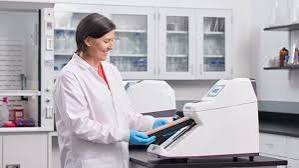
The newly introduced BlockTracker and SlideTracker platforms are designed to automate the storage, organization, and retrieval of pathology specimens while creating a complete chain of custody throughout the sample lifecycle.
BlockTracker focuses on automated archiving of pathology tissue blocks, enabling laboratories to manage high volumes of specimens with reduced dependence on manual filing processes. According to the companies, a single BlockTracker system can archive up to 1,500 blocks per hour, allowing laboratories to handle large specimen volumes while maintaining daily operations.
The system also supports the archiving of historical specimens, helping laboratories organize existing collections without disrupting routine workflows. This capability is particularly valuable for institutions managing large pathology archives accumulated over years of diagnostic activity.
SlideTracker provides automated management of pathology slides by replacing manual slide filing with a barcode-based digital archiving approach. The system can load 200 slides in less than five minutes and automatically categorize them according to barcode identification, improving retrieval speed and reducing the possibility of misplaced samples.
Together, the platforms allow laboratories to establish a digitally connected tracking system that records where each specimen is stored, how it moves through the laboratory, and which personnel interact with it. This creates greater visibility across the entire pathology workflow and supports improved accountability.
For laboratory leaders, automated archiving can provide operational benefits beyond sample organization. Reducing manual filing requirements allows skilled laboratory staff to focus more time on diagnostic activities and other high-value responsibilities. At the same time, improved storage density can help laboratories optimize physical space and reduce long-term archival costs.
The solutions are designed to integrate with existing laboratory environments rather than requiring major workflow changes. BlockTracker and SlideTracker are compatible with standard pathology storage systems and can connect with laboratory information systems (LIS) and existing IT infrastructure.
Epredia Strengthens Digital Pathology Ecosystem Through Strategic Collaboration
The agreement with Lab Improvements represents another step in Epredia’s broader strategy to support pathology laboratories with connected technologies that improve accuracy, efficiency, and patient outcomes.
The company’s portfolio already includes solutions across tissue processing, staining, slide preparation, and pathology workflow management. By adding automated archiving capabilities, Epredia is expanding its ability to support laboratories throughout the complete diagnostic pathway, from specimen preparation to long-term sample management.
A key advantage of the combined platform is its compatibility with Epredia’s existing solutions, including SlideMate Laser Printers used for slides and cassettes. This allows laboratories to maintain established workflows while adding automation where it can provide the greatest operational impact.
The centralized database within the archiving platform provides laboratory teams with access to digital records, reporting tools, and sample tracking information from different workstations. This enables better oversight of specimen movement while supporting laboratory quality management practices.
The importance of efficient tissue management is increasing as healthcare systems move toward more personalized treatment approaches. Pathology samples often serve as long-term resources for additional testing, biomarker analysis, and research applications. Maintaining accurate records and reliable access to these specimens is therefore becoming increasingly important for both clinical care and scientific research.
Healthcare laboratories are also under pressure to improve productivity without compromising diagnostic quality. Automated technologies such as intelligent archiving systems provide a pathway to modernize operations while addressing challenges related to growing sample volumes and limited staffing availability.
Through the collaboration, Epredia and Lab Improvements aim to provide U.S. pathology laboratories with improved control over specimen management and greater confidence in sample traceability. The introduction of BlockTracker and SlideTracker highlights the growing role of automation in strengthening pathology infrastructure and supporting the future of precision medicine.
As cancer diagnostics and molecular testing continue to expand, efficient management of tissue samples will remain a fundamental requirement for laboratories worldwide. By combining automated storage, digital tracking, and integrated workflow solutions, Epredia’s latest initiative reflects the broader transformation of pathology toward more connected, reliable, and patient-focused diagnostic environments.
Ref: https://ca.finance.yahoo.com/news/epredia-launches-automated-archiving-pathology-123000466.html