
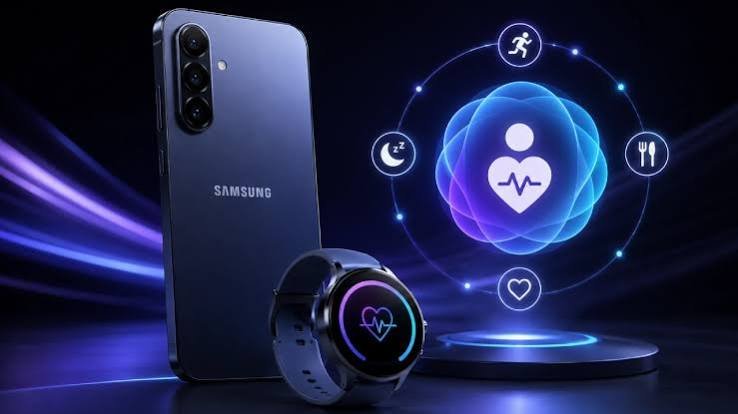

Samsung AI Health Assistant aims to transform how consumers understand and manage their wellness by bringing fragmented health data into a single AI-powered platform, highlighting the growing role of AI in healthcare and digital health ecosystems.
The Samsung AI Health Assistant marks Samsung’s latest move to strengthen its position in digital health, introducing an integrated platform designed to help users make sense of their health information collected across multiple devices, applications, and services. The announcement reflects a broader shift toward AI in healthcare, where technology companies are increasingly investing in intelligent platforms capable of converting large volumes of personal health data into meaningful and actionable insights.
Healthcare has entered an era where consumers generate more personal health information than ever before. Smartwatches, fitness trackers, smart rings, mobile health applications, connected medical devices, and digital wellness platforms continuously record activity levels, sleep quality, heart rate, exercise performance, nutrition, and other physiological indicators. While access to these datasets has expanded dramatically over the past decade, they often remain isolated within individual applications, limiting their ability to provide a complete picture of a person’s health.
The Samsung AI Health Assistant has been developed to address this growing challenge by creating a unified health experience inside Samsung Health. Instead of asking users to interpret disconnected reports from multiple platforms, the assistant is designed to combine information from different sources and generate personalized recommendations based on broader health patterns.
Industry analysts view this development as part of a larger transformation taking place across consumer healthcare. Rather than competing solely on hardware capabilities, technology companies are increasingly differentiating themselves through software ecosystems capable of delivering continuous health intelligence. The value proposition is shifting from simply collecting health metrics to helping users understand what those measurements actually mean and how they can influence long-term wellness.
Samsung’s latest announcement also reflects the growing importance of preventive healthcare, where continuous monitoring and personalized insights are becoming central components of everyday health management instead of being limited to clinical environments.
Samsung AI Health Assistant Aims to Eliminate Fragmented Health Data
The core objective of the Samsung AI Health Assistant is to simplify one of the biggest challenges facing digital health users today: fragmented information. Consumers often use multiple devices throughout the day, each generating valuable health data but storing it independently. Fitness watches track physical activity, smart rings monitor sleep, smartphones record movement, nutrition applications monitor dietary intake, and specialized health platforms collect additional medical information. Without integration, these datasets rarely provide meaningful clinical or lifestyle context.
Samsung’s new platform seeks to overcome this limitation by creating a more connected health ecosystem. By bringing together structured and unstructured health information from compatible devices and services, the assistant can present users with a more comprehensive understanding of their overall wellness instead of isolated measurements.
The timing aligns with significant growth in wearable technology adoption worldwide. Industry reports estimate that nearly 60 percent of Americans now own at least one wearable device, while more than 80 percent of wearable users interact with these devices at least five days each week. This widespread adoption has created enormous volumes of continuous health data that remain underutilized due to limited interoperability between platforms.
Samsung already maintains one of the world’s largest connected device ecosystems, including smartphones, Galaxy Watches, fitness monitoring tools, and health applications. By expanding the intelligence within Samsung Health, the company is leveraging this existing infrastructure to offer users deeper insights without requiring additional hardware investments.
The platform is expected to analyze health information collected over extended periods, allowing users to identify trends rather than focusing only on individual daily readings. Longitudinal data analysis can help users better understand changes in sleep quality, physical activity, recovery patterns, cardiovascular indicators, and overall wellness while supporting more informed lifestyle decisions.
Although the company positions the assistant as a personal wellness companion rather than a clinical diagnostic tool, the initiative reflects increasing consumer demand for technologies that provide proactive health guidance before medical intervention becomes necessary.
Samsung Joins Global Technology Leaders Expanding AI in Healthcare
The launch of the Samsung AI Health Assistant also highlights a broader competitive trend across the global technology industry. Several of the world’s largest technology companies are investing aggressively in AI in healthcare, recognizing that healthcare represents one of the fastest-growing opportunities for artificial intelligence, advanced analytics, and connected digital services.
For Samsung, healthcare software has become an increasingly important strategic extension of its traditional strengths in consumer electronics and connected devices. The company appears to be moving beyond hardware innovation toward building an integrated digital health ecosystem capable of supporting users throughout their wellness journey.
Samsung is not alone in this strategy. NVIDIA, historically recognized for graphics processors and advanced computing hardware, has expanded its healthcare investments through partnerships focused on medical imaging, robotics, computational biology, drug discovery, digital twins, and clinical research platforms. The company continues to allocate substantial resources toward accelerating healthcare innovation using artificial intelligence and high-performance computing.
Google has similarly expanded its healthcare portfolio through research involving medical AI models, clinical analytics, disease prediction, and pharmaceutical research, while Amazon has strengthened its healthcare presence through One Medical and other digital health initiatives aimed at improving patient access and care delivery.
Collectively, these investments illustrate how healthcare has become a strategic priority for leading technology companies. The industry’s complexity, rising healthcare expenditures, aging populations, and increasing adoption of connected medical technologies are creating demand for platforms capable of simplifying healthcare experiences for both consumers and providers.
Analysts believe the next phase of competition will depend less on individual devices and more on how effectively companies integrate information across broader digital ecosystems. Consumers increasingly expect health platforms that not only collect information but also explain trends, identify opportunities for healthier behavior, and provide personalized guidance based on continuously evolving datasets.
The Samsung AI Health Assistant represents an important step in that direction. By focusing on unified health intelligence rather than isolated device functionality, Samsung is positioning itself within the rapidly evolving digital health landscape where artificial intelligence, connected devices, and personalized wellness services are becoming increasingly interconnected. As healthcare continues shifting toward prevention, continuous monitoring, and consumer engagement, platforms capable of transforming fragmented health information into practical everyday insights are expected to play an increasingly significant role in the future of AI-powered healthcare.