
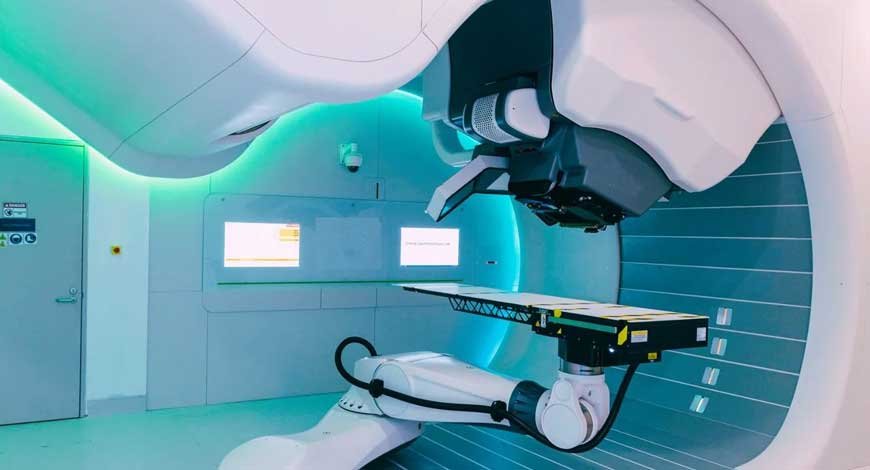

Assam is preparing to add advanced cancer treatment infrastructure to its public healthcare system, with the state government announcing plans to establish a proton beam therapy unit at Guwahati Medical College and Hospital (GMCH). The proposed facility is expected to make Assam the first state in India to offer proton beam therapy through a government hospital, according to Chief Minister Himanta Biswa Sarma.
The project is being positioned as a major investment in cancer care in the northeastern region, where patients requiring highly specialized treatment often need to travel to larger metropolitan centers. The state plans to combine financial support from the World Bank with its own funding to establish the facility, potentially reducing the need for patients to seek certain forms of advanced radiation treatment outside Assam.
The planned expansion comes as India’s cancer care market continues to develop across multiple treatment areas, including cancer immunotherapy, precision radiation, targeted therapies and advanced diagnostic technologies. While proton beam therapy is a form of radiation treatment rather than immunotherapy, the addition of the facility would broaden the range of sophisticated cancer treatment infrastructure available within Assam’s public healthcare network.
Assam Plans ₹600 Crore Proton Beam Therapy Investment
The proposed proton beam therapy facility at GMCH is expected to involve a total investment of ₹600 crore. According to Sarma, the World Bank will provide a loan of ₹315 crore, while the Assam government will contribute another ₹285 crore toward the project.
The investment reflects the high cost and technical requirements associated with proton beam therapy. Unlike conventional radiation treatment, which uses X-rays or photons, proton therapy uses accelerated protons to deliver radiation to a tumor. The physical characteristics of proton beams allow physicians to control where much of the radiation energy is deposited, potentially limiting exposure to surrounding healthy tissue in selected cases.
This precision is particularly important when tumors are located close to sensitive organs or structures. Reducing unnecessary radiation exposure can be an important consideration in cancer treatment, especially for certain pediatric cancers and tumors located in anatomically difficult areas.
Sarma said the proposed facility would give Assam a position at the forefront of public-sector cancer treatment in India. At present, proton beam therapy is available at private facilities in Mumbai and Chennai, while government hospitals have not yet established comparable units, according to the chief minister.
The planned center could therefore have significance beyond Assam’s borders. Patients from neighboring northeastern states may also find it easier to access advanced radiation treatment in Guwahati rather than traveling to western or southern parts of the country.
The state’s location could make the project particularly relevant to the wider healthcare ecosystem in Northeast India. Guwahati already serves as a major medical and transportation hub for the region, and the addition of specialized cancer infrastructure could strengthen that role.
However, establishing a proton therapy center involves more than installing treatment equipment. Such facilities require specialized medical professionals, trained radiation oncologists, medical physicists, engineers and other technical staff. Long-term maintenance, patient selection, treatment planning and operational costs will also determine how effectively the investment translates into accessible care.
Proton Therapy Could Strengthen Assam’s Medical Tourism Ambitions
The Assam government is also viewing the proposed facility through a broader economic and healthcare development lens. Sarma said the state hopes the unit will not only serve local patients but also attract people from other regions seeking advanced cancer treatment.
Medical tourism has become an increasingly important part of India’s healthcare economy, with patients from neighboring countries and regions traveling for specialized procedures. Assam could potentially build on its geographic position to attract patients from the northeastern states and nearby countries if it develops a strong ecosystem around oncology services.
The proposed project comes alongside a much larger development plan approved by the state cabinet. Assam has approved expenditure of ₹50,000 crore over seven years beginning in the 2027-28 financial year, covering healthcare, education, infrastructure and other sectors.
Under the broader program, the government plans to allocate ₹7 crore each to 1,000 high schools for infrastructure improvements, establish 6,000 new anganwadi centers and develop women markets and stadiums across constituencies. The program also includes road development and other infrastructure projects.
The government plans to finance ₹30,000 crore of this wider expenditure through borrowing from the National Bank for Agriculture and Rural Development, or NABARD, while the remaining ₹20,000 crore is expected to come from higher state revenue collections.
Within this broader investment agenda, the proton beam therapy project stands out because of its potential impact on specialized healthcare. Cancer treatment is an area where infrastructure gaps can have significant consequences for patients, particularly when advanced procedures are concentrated in a small number of cities.
Sarma has also pointed to the limited number of proton beam therapy facilities globally, noting that there are around 40 such units worldwide. The technology is considered particularly valuable for carefully selected cancers where minimizing radiation exposure to nearby healthy tissue is clinically important.
The project will nevertheless need to overcome several practical challenges before patients can benefit from it. Building the facility, acquiring equipment, developing clinical expertise and ensuring consistent patient access will require sustained investment beyond the initial capital expenditure.
For Assam, the proposed GMCH unit could mark a significant change in the state’s cancer treatment capabilities if those requirements are successfully addressed. It could also become an important component of the state’s efforts to reduce healthcare-related travel and establish Guwahati as a destination for specialized medical services.
The project ultimately reflects a wider shift in India’s public healthcare investment toward advanced treatment infrastructure. If implemented as planned, Assam’s proton beam therapy center could give government hospitals a new role in delivering highly specialized cancer care while creating opportunities for the state to serve patients from across the Northeast and potentially international markets.