
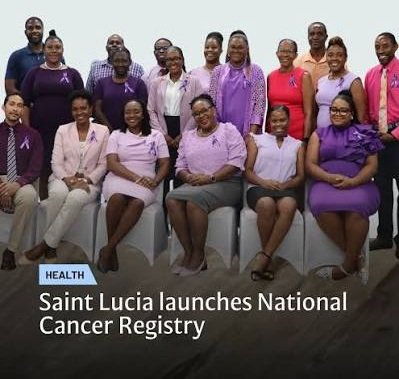

Saint Lucia has taken a significant step toward improving its national cancer control strategy with the official launch of its National Cancer Registry, a centralized platform designed to collect, analyze, and report comprehensive cancer data across the country. The initiative is expected to provide policymakers, healthcare providers, and public health authorities with reliable evidence to better understand disease patterns, improve resource allocation, and strengthen long-term cancer prevention and treatment strategies.
Introduced by the Ministry of Health, Wellness and Nutrition under the theme “Data for Action: Building a Stronger Response to Cancer,” the registry represents one of the country’s most important public health infrastructure projects in recent years. The launch also reflects a broader regional effort to improve cancer surveillance throughout the Caribbean as governments respond to rising cancer incidence and increasing pressure on healthcare systems.
The initiative also arrives at a time when advances in cancer therapeutics are rapidly reshaping oncology care worldwide. As innovative targeted therapies and precision medicine become more widely available, robust population-level data will play an increasingly important role in identifying treatment needs, monitoring patient outcomes, and supporting evidence-based healthcare planning.
National registry expected to strengthen cancer surveillance and healthcare planning
The newly established National Cancer Registry will function as a centralized database capable of tracking cancer incidence, prevalence, mortality, survival outcomes, and disease distribution across Saint Lucia. By consolidating information from healthcare providers and institutions, the system will create a more accurate picture of the country’s cancer burden while supporting informed policy decisions.
Health officials believe the registry will help bridge longstanding information gaps that have limited comprehensive cancer planning. Until now, the absence of a population-based surveillance system has made it difficult to fully assess disease trends or evaluate the effectiveness of national cancer control initiatives.
Reliable data has become an essential component of modern healthcare systems. Governments increasingly depend on high-quality epidemiological information to prioritize investments, expand screening programs, improve diagnostic services, and strengthen treatment capacity. Without standardized national datasets, healthcare planning often relies on fragmented reports that may not accurately represent the true disease burden.
During the launch event, healthcare leaders emphasized that every data point collected through the registry represents an individual patient whose experience contributes to improving care for future generations.
The registry will not only document the number of cancer cases diagnosed annually but also provide insights into disease characteristics, geographic distribution, age-related trends, and long-term outcomes. Such information enables public health authorities to identify emerging challenges earlier and implement targeted interventions where they are needed most.
Officials also expect the registry to improve monitoring and evaluation of national cancer prevention initiatives, allowing healthcare policymakers to measure the effectiveness of screening campaigns, awareness programs, and treatment investments over time.
The launch ceremony brought together representatives from national healthcare institutions alongside regional and international organizations, including the Pan American Health Organization, the Caribbean Public Health Agency, and the International Agency for Research on Cancer. Their participation highlights the collaborative nature of cancer surveillance efforts across the Caribbean and the growing emphasis on harmonized public health data.
Reliable evidence expected to guide future cancer policy and investment
Health authorities acknowledged that recent observations have raised important questions about changing cancer patterns across the country. Medical professionals have reported increasing diagnoses among younger individuals, creating additional urgency for comprehensive surveillance capable of identifying evolving disease trends.
Officials also noted that preliminary figures suggested a decline in overall cancer incidence during 2025. However, without a fully operational population-based registry, researchers have been unable to determine whether the observed changes reflected genuine improvements, reporting variations, or other underlying factors.
The National Cancer Registry is expected to address these uncertainties by generating standardized, high-quality information that supports long-term evidence-based decision making.
Beyond tracking disease statistics, the registry is expected to influence healthcare investment priorities. Governments require accurate information to determine where additional diagnostic facilities, oncology services, specialized workforce training, and supportive care resources should be deployed. Better data ultimately contributes to more efficient use of healthcare funding while improving patient access to services.
The registry also creates opportunities for stronger collaboration with international cancer research initiatives. Standardized national data can contribute to regional surveillance programs, comparative epidemiological studies, and global efforts aimed at understanding changing cancer patterns across different populations.
Public health experts attending the launch emphasized that cancer registries have evolved into strategic healthcare assets rather than simply data collection systems. They provide governments with measurable evidence that supports planning across the entire continuum of cancer care, from prevention and early detection to diagnosis, treatment, survivorship, and palliative care.
International partners reaffirmed their commitment to supporting Saint Lucia as the registry continues to develop. Ongoing technical assistance, training, and knowledge sharing are expected to strengthen data quality while ensuring the registry aligns with internationally recognized surveillance standards.
The launch also acknowledges the contributions of healthcare professionals and public health advocates whose long-term efforts helped establish the country’s cancer surveillance infrastructure. Building a national registry requires years of planning, coordination, institutional collaboration, and sustained policy commitment before becoming fully operational.
As cancer cases continue to increase globally due to aging populations, lifestyle changes, and improved diagnostic capabilities, governments are placing greater emphasis on building stronger health information systems. Reliable surveillance enables healthcare leaders to anticipate future demand rather than simply responding after challenges emerge.
For Saint Lucia, the National Cancer Registry represents an investment in evidence-based healthcare governance. The information generated through the platform will help policymakers evaluate disease trends, strengthen prevention strategies, allocate healthcare resources more effectively, and improve long-term outcomes for patients across the country.
While the registry itself will not directly reduce cancer incidence, it provides the foundation required for smarter healthcare decisions. By transforming fragmented clinical information into actionable national intelligence, Saint Lucia is creating a stronger framework for future cancer control efforts, reinforcing the role of high-quality health data as a cornerstone of modern public health policy.