
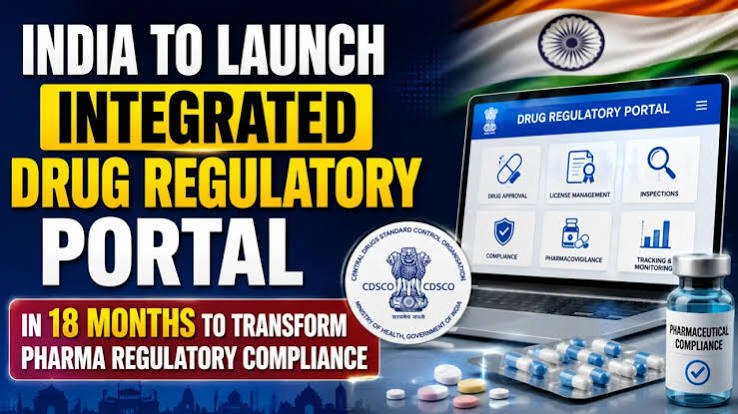

India is set to take a significant step toward modernizing its pharmaceutical regulatory ecosystem with the rollout of the first phase of a comprehensive digital drug regulatory platform over the next 18 months. Announced by the Central Drugs Standard Control Organisation (CDSCO) during the Global Drug Regulatory Conclave (GDRC) 2026 in New Delhi, the initiative is designed to digitally connect every stage of the pharmaceutical value chain, from research and clinical development to manufacturing, approvals, distribution, and post-market surveillance.
The new platform represents one of the country’s most ambitious regulatory modernization efforts to date. As India’s pharmaceutical industry expands beyond generic medicines into biologics, advanced therapies, and precision medicine, regulators are focusing on building a technology-driven framework that improves transparency, efficiency, and global regulatory alignment while maintaining high standards for patient safety and product quality.
CDSCO Advances Digital Transformation Across India’s Drug Regulatory System
India has steadily expanded its pharmaceutical footprint over the past decade, becoming one of the world’s largest producers of generic medicines while strengthening its position in vaccine manufacturing and specialty drug development. As the sector evolves, regulatory systems must also adapt to support innovation without slowing product approvals or compromising compliance.
The digital platform announced by CDSCO aims to create a unified regulatory ecosystem by integrating central authorities, state regulators, pharmaceutical manufacturers, research institutions, and other stakeholders into a common digital network. Once operational, the platform is expected to simplify regulatory interactions while improving coordination across multiple agencies responsible for pharmaceutical oversight.
According to Drugs Controller General of India Dr. Rajeev Singh Raghuvanshi, the initiative forms part of a broader roadmap focused on digital governance, scientific excellence, quality assurance, and international regulatory convergence.
The modernization programme also aligns with emerging technologies shaping pharmaceutical development. As regulators increasingly evaluate artificial intelligence for drug discovery, digital review systems and data-driven regulatory processes are becoming essential for managing complex clinical evidence, accelerating scientific assessments, and supporting innovation across the healthcare sector.
Dr. Raghuvanshi noted that CDSCO has already digitized more than 99 percent of its regulatory processes, significantly improving transparency and reducing approval timelines. The next phase builds upon these achievements by introducing an integrated platform capable of handling regulatory activities across the complete pharmaceutical lifecycle.
The organisation has also initiated pilot programmes exploring the use of artificial intelligence within regulatory operations. These efforts are intended to enhance decision-making, improve operational efficiency, and enable a more responsive regulatory environment capable of managing increasingly sophisticated pharmaceutical products.
Another major enhancement involves the introduction of QR code authentication for Good Manufacturing Practice (GMP) certificates and Certificates of Pharmaceutical Product (COPP). The digital verification system will allow overseas regulators to instantly confirm certificate authenticity, helping reduce administrative delays while strengthening international confidence in India’s pharmaceutical exports.
Regulatory Reforms Support Innovation and Global Pharmaceutical Competitiveness
The digital platform forms part of a wider transformation underway within India’s pharmaceutical regulatory framework. Policymakers increasingly recognize that regulatory modernization plays a critical role in supporting innovation while maintaining patient safety and product quality.
Speaking during the Global Drug Regulatory Conclave, Union Minister for Health and Family Welfare Jagat Prakash Nadda highlighted India’s transition from a major supplier of affordable generic medicines toward becoming a global centre for pharmaceutical innovation.
According to the minister, emerging areas such as biologics, biosimilars, gene therapies, precision medicine, AI-assisted drug development, and digital therapeutics require regulatory systems capable of evaluating increasingly complex scientific evidence without creating unnecessary barriers to innovation.
Alongside the digital platform, CDSCO has introduced several initiatives designed to improve regulatory efficiency. These include a fully digitized export No Objection Certificate system, globally aligned regulatory reliance mechanisms, and accelerated approval pathways for innovative therapies.
The regulator is also reviewing opportunities to waive clinical trial requirements for selected innovative products where appropriate scientific evidence already exists. Current estimates indicate that approximately 25 to 30 percent of eligible innovative therapies may qualify under evolving regulatory provisions, potentially reducing development timelines while maintaining safety standards.
Support for emerging healthcare technologies extends beyond pharmaceutical products. The MedTech Mitra programme has already assisted more than 800 medical technology startups in navigating India’s regulatory landscape, with similar facilitation mechanisms planned for biologics and other advanced therapeutic technologies.
Industry leaders attending the conclave emphasized the importance of predictable and transparent regulatory pathways for maintaining India’s competitiveness in global pharmaceutical markets.
Mohit Yadav, Joint Secretary in the Department of Commerce, noted that efficient regulation has become one of the most important factors determining international market access for pharmaceutical products. Faster approval processes supported by digital technologies can improve patient access while preserving regulatory integrity.
Similarly, Pharmaceuticals Export Promotion Council of India Chairman Namit Joshi highlighted India’s opportunity to strengthen its position not only as a pharmaceutical manufacturing hub but also as a trusted regulatory partner through harmonized standards, consistent compliance, and internationally recognized regulatory practices.
The Global Drug Regulatory Conclave 2026 brought together regulators, policymakers, researchers, industry executives, and international organizations to discuss the future of pharmaceutical regulation. Discussions focused on digital transformation, regulatory science, global collaboration, innovation, and resilient healthcare supply chains capable of supporting timely access to safe and effective medicines.
The planned rollout of the integrated digital platform represents an important milestone in India’s long-term regulatory strategy. By combining digital infrastructure, internationally aligned standards, artificial intelligence, and streamlined regulatory processes, CDSCO aims to create a future-ready framework that supports pharmaceutical innovation while strengthening global confidence in India’s healthcare ecosystem. As implementation progresses over the coming months, the initiative is expected to improve regulatory efficiency, facilitate scientific innovation, and reinforce India’s position as one of the world’s leading pharmaceutical markets.
Ref: https://www.pharmabiz.com/NewsDetails.aspx?aid=187641&sid=1